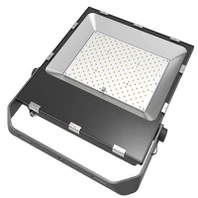

LED lamp lumen directional light source content sharing
As mentioned earlier, LED lights are essentially directional light. And, although there are multi-directional LED bulbs, they are designed so that they can make up for lost light. In other words, lighting engineers design a fixture or bulb that places the LED chip in different locations to provide non-directional lighting and prevent excessive light loss.

LED lamp lumen directional light source 1, direction lighting
The LED chip itself provides a directional illumination. Conventional light sources such as metal halides, high pressure sodium, fluorescent lamps and incandescent lamps are omnidirectional. That means they glow in all directions. As a result, they work well as a universal light source for the home. However, for specialized commercial and industrial environments such as warehouses, factories, and other commercial facilities, they need reflectors to collect and "collect" light in order to focus it and direct it to where it is available. The problem with reflecting light sources is that most of the light produced becomes unusable, otherwise known as lumen loss. Any internal reflection of more than one reflection effectively loses one lumen of light.
LED lamp lumen directional light source 2. Metal halide bulb
Let's take a metal halide bulb as an example. Like LEDs, they are also popular in commercial and industrial applications. However, unlike LEDs, they are not directional. So consider the particles of light produced by metal halide bulbs. In fact, very few particles are reflected off at least one surface and do not reach the ground. So when a light particle is produced, it is likely to hit the reflector of the light fixture, which then tries to direct it to the floor.
LED lamp lumen directional light source 3. Lamp reflector
If this does not succeed, it is sent to another part of the luminaire reflector to repeat the process. At this point, the value of the light particle is lost. It has been shown that you can lose up to 30 percent of your effective lumens in the process. However, when you use LED lighting, you receive most, if not all, of its light particles.
LED lamp lumen directional light source 4. Quality not quantity
When you have better lumens, you need fewer lumens. The quality of light from any source (even the sun) is measured by the color rendering index (CRI). The CRI is a scale used to measure the accuracy of a color produced under a particular light source. Of course, the gold standard is the Suns with a score of 100. All other scores were on a scale of 1 to 100.
LED lamp lumen directional light source 5. Light quality.
The best explanation for light quality is to perform a simple test. Let's compare LEDs with high pressure sodium (HPS) lamps. In our experience, people often tell you that a 20,000 lumen LED is much brighter than a 60,000 lumen HPS. This is because LEDs have a CRI of 70 plus and an HPS of 22.
The above is the sharing about the LED lamp lumen directional light source, I believe you have a certain understanding of this knowledge after reading the above summary, want to know more about the LED lamp lumen directional light source information, you can go to the customer service for consultation.
Shenzhen Benwei Lighting Technology Co., Ltd is a professional manufacturer in producing LED lighting products, Our main products T8 T5 LED Tube, LED Grow Light,Poultry LED Light,Tri-proof LED Light,LED Flood Light, LED Panel, LED Stadium Light, LED High Bay, LED Strip light, If you want to purchase a high-quality LED lighting products or have a more in-depth understanding of the application of LED lighting, please contact send us inquiry.